
 MENU
MENU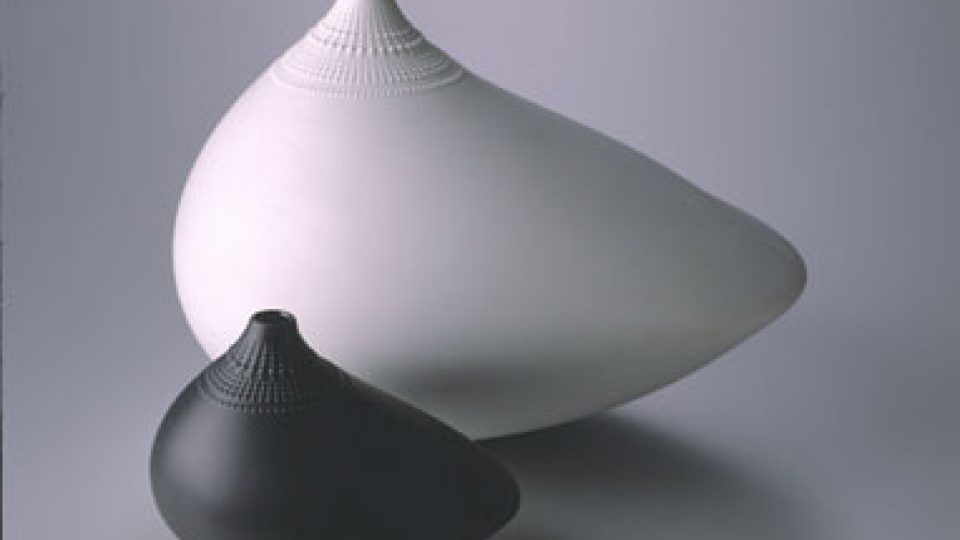
The Belgrade exhibition has been organized by the Museum of Applied Art in cooperation with the Finnish Museum of Art and Design in Helsinki, with the support of the Finnish Embassy in Belgrade.
Exhibition setting by Architectural bureau Johan Palasma, arch. Temu Taskinen
Programme coordinator Dejan Sandić, International Cooperation Curator
Conceived as a touring exhibition, it had its opening in Helsinki, in 2000, and since then it has been presented all over America and Europe – Tallinn, Toronto, Mexico City, Philadelphia, Washington, Sunderland, Lisbon, Madrid, Zagreb and Ljubljana.
This exhibition presents in the best way possible the work of Tapio Virkkala, Finland’s most significant designer and one of the most respected designers of the world.
Born in 1915, in a small port of Hanko in southern Finland, Virkkala was educated to be a sculptor at the Central School of Art and Design in Helsinki. In a short period he achieved great national success, working with the most celebrated Finnish glassmakers – Ittala and Karhul, as well as with the largest jewelry and silverware producer in Finland – Kultakeskus.
International recognition came after exceptional success at the Trienalles di Milano in 1951 and 1954, when he won the Grand-Prix three times consecutively, thereby establishing himself at the beginning of the 1950’s not only as the most successful Finnish designer, but as the most significant artist within the wider frame of Scandinavian design as well.
Working at Raymond Levi’s design studio in New York (1955-1956), and many decades of cooperation with the famous German porcelain manufacturer Rosenthal (1956-1985) and the Italian Murrano glass manufacturer Venini (1965-1985) earned Virkkala world fame and respect. During the four decades of long, rich and diverse artistic work, he created many classical works of world design, using mostly traditional materials, such as glass, porcelain, metal and wood.
The exhibition comes with a monograph in English Tapio Virkkala, the eye, the hand and the thought by a group of authors, as well as a catalogue in Serbian, published by the Museum of Applied Art, containing texts by Dejan Sandić.
As a part of the programme following the Tapio Virkkala – a legend of Finnish design, Ms. Eva Vilianen, curator at the Museum of Art and Design in Helsinki, held a lecture on Finnish design and the work of Tapio Virkkala on January the 20th, at the Žad gallery of the Museum of Applied Art.
Finding inspiration in nature and geometry, Virkkala created authentic and original biomorphic forms that sometimes were easily recognizable as a bird, a shell, a blade of grass, or a leaf, and sometimes completely abstract and simplified to their geometry forms.
Equally devoted to creating unique objects of art and to mass-produced industrial production, Virkkala most successfully brought together craftsmanship, industrial technologies and art, creatively combining different media, materials and technologies. Many of his works, especially in the field of glass and porcelain design, have long ago become parts of design history. Some of them are still being produced, even though Tapio Virkkala died in 1985.


Jaansaro (Ice block) 3147/3847, molded crystal, cut, LIttala 1952 - 1969

Kantarelli (Chanterelle vase), turned-mold blown crystal glass, LIttala 1946, 1952 - 1957

Bolle bottles 503, free-blown glass, incalmo, Venini factory, 1967

Century, porcelain, Rosenthal AG, 1979

Finlandia vodka, IS machine-blown glass, Karchula 1966

Flatware 3500 Composition, chrome nickel, matte brushed steel, Rosenthal AG, 1962

Pendant Kuunsirppi (Crescent moon), silver, Kultakeskus 1971

Pollo vases, porcelain, Rosenthal AG, 1970

Pyorre (Whirl), plywood, laminated birch, 1954

Art Object Tokyo 3576, mold formed crystal, cut, LIttala 1966

Variation, porcelain, Rosenthal AG,1962

Paperbag, porcelain, Rosenthal AG, 1977

Paadarin jaa (Paadar\'s ice), cast glass, LIttala 1962
