
 MENU
MENU
The performance during the opening night will be carried out by the „Čudesmo“, group, and the ladies – members of the Ethno Network will represent their work.
Organizers: Australian Embassy and the Museum of Applied Art
Ehibition „Yilpinji: Love, Magic and Ceremony” is a less known segment of the Aboriginal visual art which relates to Yilpinji, love magic practised by Warlpiri and Kukatja people of the Central and Western Deserts of Australia.
Strong tradition among the Aboriginal peoples includes love magic and rituals with singing of secret love songs and other forms of artistic expression. “…A man sings a Yilpinji song to attract the attention of a woman. A woman on the other hand sings to charm her lover by powerful Yilpinji songs. The Aboriginal love poetry, songs and stories as well as practices in visual art – they all refer to physical love.
Occasionally Yilpinji rituals include body painting or making talismans, i.e. specific “love objects”. These ceremonies are performed separately by men and women in order to attract the object of their adulterous or forbidden sexual desires. Even more, many stories from the Dreaming and the related rituals observed by Kukatja and Warlpiri peoples contain taboos and promise serious consequences for illegitimate or forbidden love – that is to say love against strictly set rules related to blood relations within a community.
Dreaming should be understood as the Aboriginal religion. It is the background of the traditionally oriented Aboriginal art. All the Dreaming and accompanying narratives on dreaming refer to a particular part of the area owned by a particular community i.e. they are connected to a particular location. Dreaming also rules the topic an Aboriginal artist may paint in accordance with the Law. Dreaming may be sung about, explained in long oral narratives, danced or painted.
As is the case with all abstract manifestations, culturally based expression of love should be understood in its broader dynamic socio-cultural context. Therefore all the stories and visual art works related to Yilpinji constitute integral part of the comprehensive Aboriginal concept of Dreaming.
Author of the exhibition and the catalogue text isProf. Dr. Cristine Nicholls, Finders Faculty, Australia.
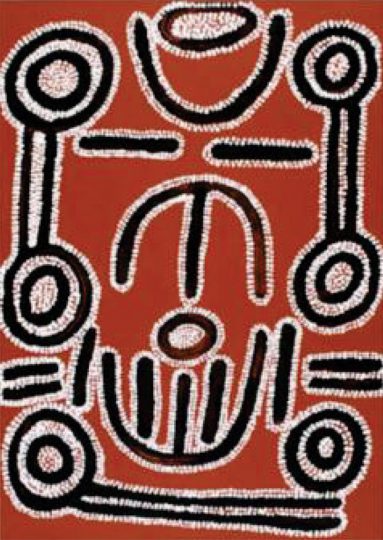
Ronnie Lawson Jakamarra
Karnta-kurlangu Jukurrpa (Women’s Dreaming)

Lily Hargreaves Nungarrayi
Liwirringki (Burrowing Skink Dreaming)

Abie Jangala
Ngapa Jukurrpa (Rainbow Men Dreaming)
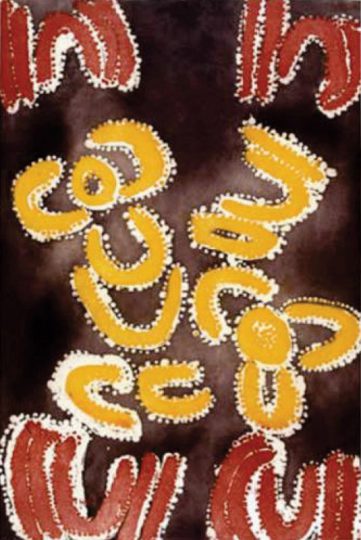
Uni Martin Nampijinpa
Wayipi Jukurrpa (Tar Vine Dreaming)
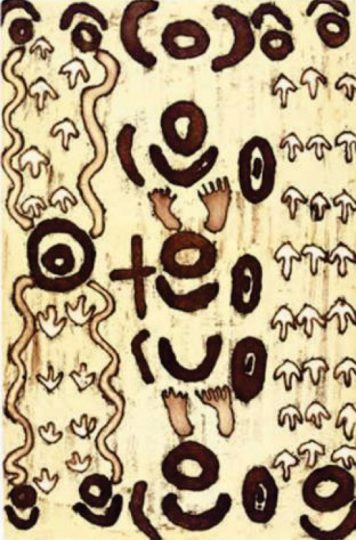
Teddy Morrison Jupurrurla
Kurlukuku Jukurrpa (Diamond Dove or Native Pigeon Dreaming)
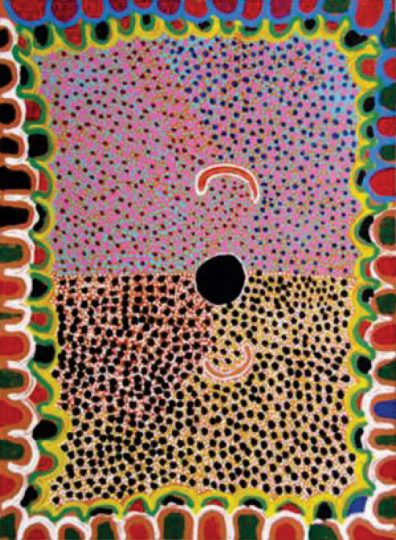
Susie Bootja Bootja Napangarti/Napaljtarri
Kaningarra
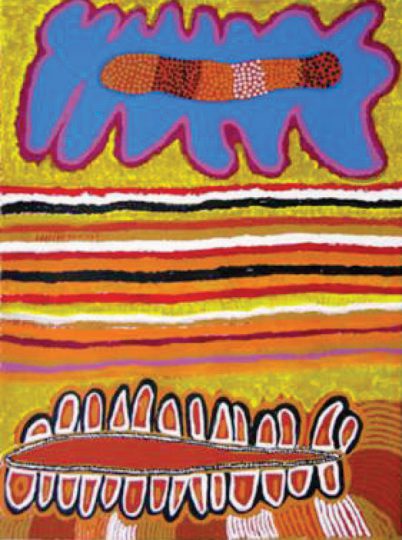
Bai Bai Napangarti
Love Magic Ceremony Design for Ngaanyatjarra (or, Old Woman with Hairstring Belt Dreaming)

Eubena (‘Yupinya’)
Nakarra Nakarra 1 – Kurrpulu Tjukurrpa (Seven Sisters Dreaming)

Helicopter Tjungurrayi
This Place, My Country
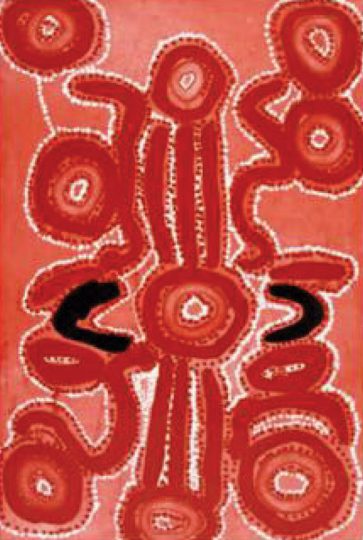
Liddy Nelson Nakamarra
Wapurtarli Jukurrpa (\'Small, or Pencil Yam Dreaming\')

Lucy Yukenbarri
Napanangka Punyanita
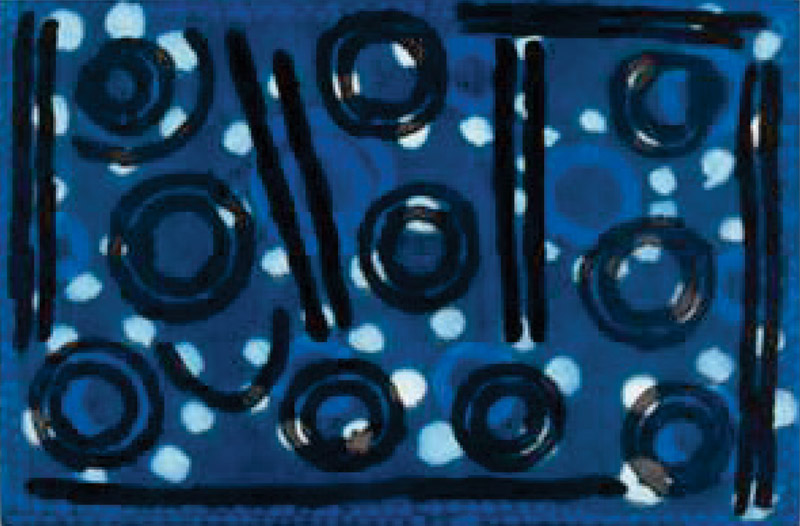
Paddy Sims Japaljarri
Yanjilypiri Jakurrpa (Star Dreaming)
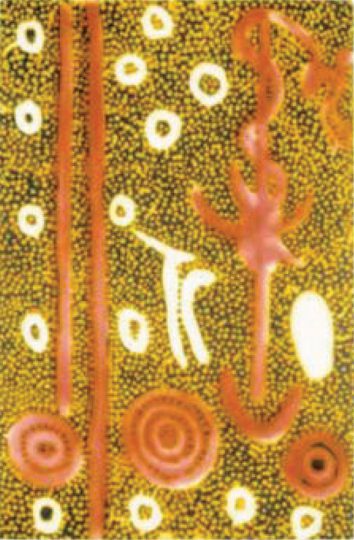
Paddy Stewart Japaljarri
Ngarlu Jukurrpa (Love Story Dreaming at the Ngarlu Site)

Rosie Tasman Napurrurla
Majardi Jukurrpa (Hairstring or Ceremonial Skirt Jukurrpa); First Love
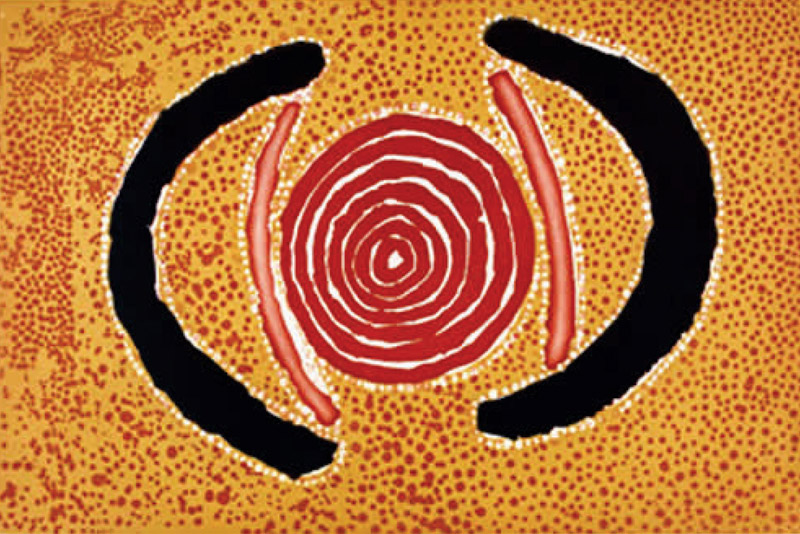
Samson Martin Japaljarri
Ngarlu Jukurrpa (Honey Ant Men\'s Love Story Dreaming)

Symbols
